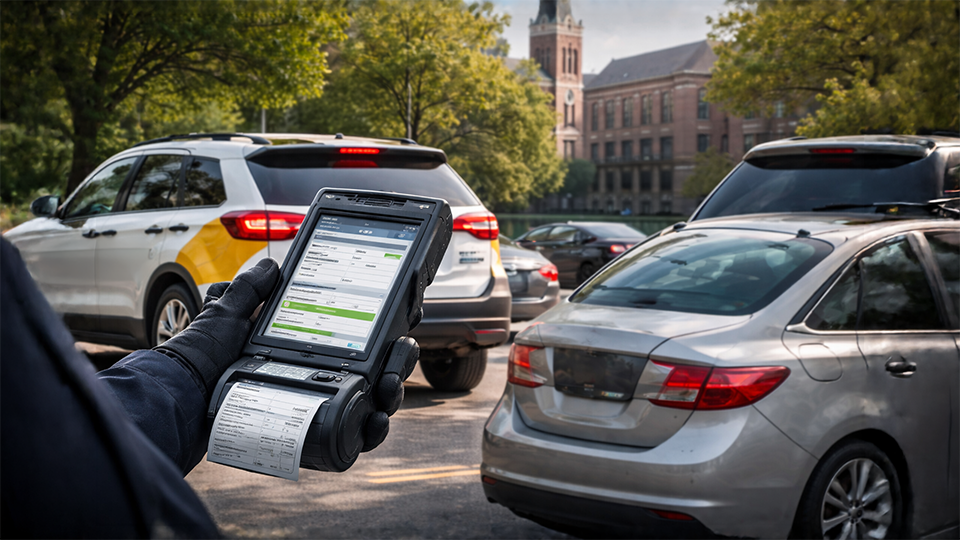
When people think about public safety, they often focus on high-profile initiatives—emergency response, patrol operations, or crime prevention programs. Parking enforcement rarely makes that list. But for many agencies, especially those serving campuses, municipalities, and healthcare facilities, parking enforcement is emerging as a foundational piece of the larger public safety puzzle.
More than just a revenue function, parking enforcement plays a direct role in traffic flow, emergency access, community relations, and operational readiness. In short: it’s time to stop treating parking as an afterthought and start treating it as strategy.
How Parking is Overlooked in Public Safety
Improperly parked vehicles can have consequences far beyond a minor inconvenience. When cars block fire lanes, emergency exits, or ambulance zones, response times suffer. In crowded environments like university campuses or hospital grounds, unchecked parking violations can lead to dangerous congestion, restricted access for emergency services, or preventable accidents.
Even in less high-stakes situations, poor parking behavior can create tensions among community members—especially when enforcement appears inconsistent or outdated. The way modernized parking is managed sets a tone for how orderly, fair, and safe a community feels.
The Rise of Data-Driven Parking Strategies
As agencies adopt more technology-driven operations, parking enforcement is no exception. Modern parking tools allow departments to go beyond reactive citation issuance and toward proactive, pattern-based enforcement.
By analyzing violation data, agencies can:
- Identify high-frequency violation zones.
- Detect repeat offenders more efficiently.
- Schedule patrols based on demand rather than fixed routes.
- Coordinate with dispatch or patrol to resolve issues tied to location-specific trends.
These insights don’t just help improve parking compliance—they support larger public safety efforts by revealing patterns that might otherwise go unnoticed. In many ways, parking data becomes one more layer of intelligence contributing to a complete picture of an agency’s environment.
Parking as a Community Engagement Tool
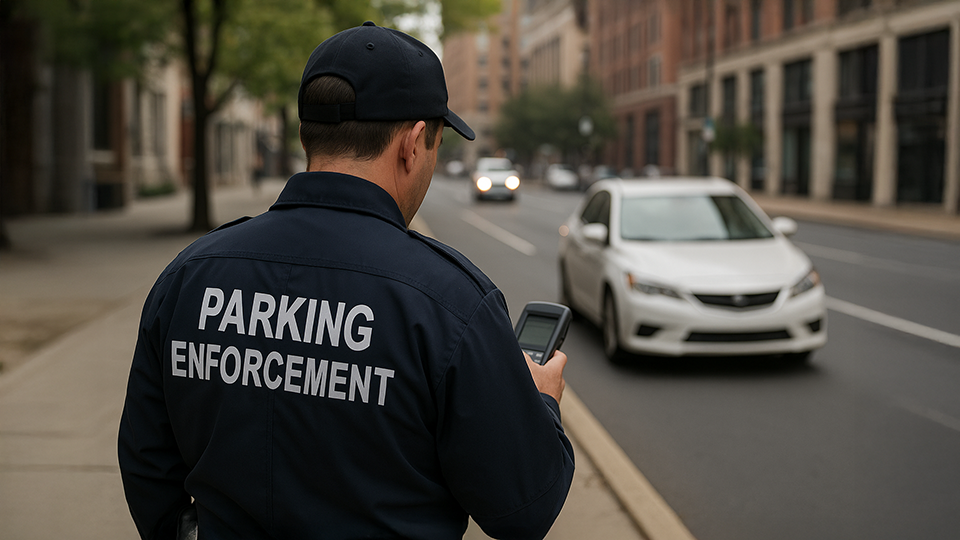
Parking enforcement is often one of the most visible touchpoints between a department and its community. Officers are seen walking lots, talking with residents, or issuing citations. That visibility creates a powerful opportunity for engagement.
When municipal departments take a professional, consistent approach to parking enforcement—using well-trained staff and clear data—it sends a message of fairness and transparency. Some agencies even implement grace periods, warnings, or educational outreach around new parking policies, reinforcing their role as partners in safety, not just rule enforcers.
These community-facing efforts often reduce complaints, improve compliance voluntarily, and foster trust between the public and the agency.
Why Integration Matters
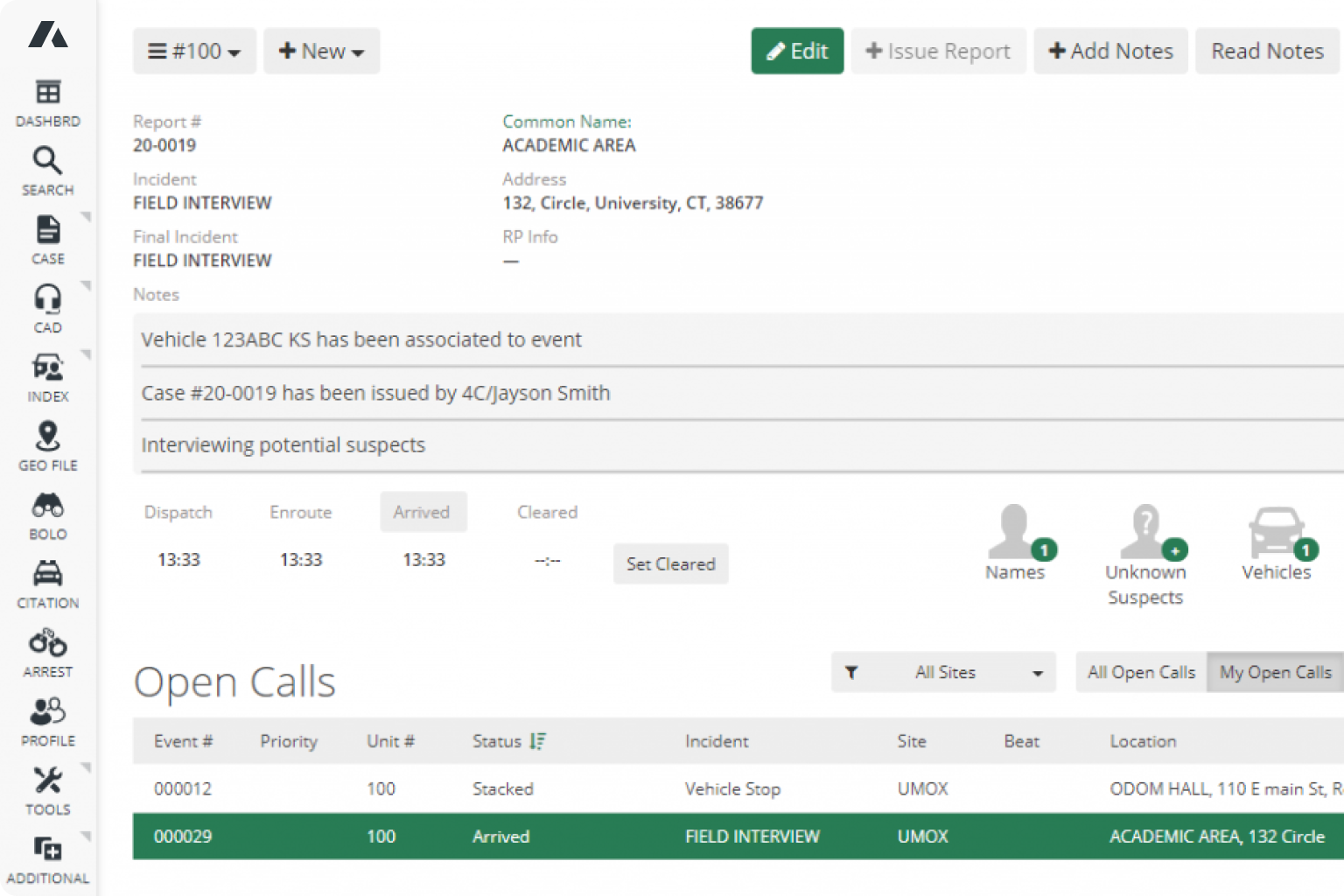
A truly strategic approach to parking enforcement doesn’t happen in isolation. The most effective agencies connect their parking tools with CAD, RMS, dispatch, and other public safety systems through robust integrations to create a seamless operational flow.
When parking violations can be tracked in real time, tied to vehicle histories, or linked to dispatch records, it opens the door for more informed decision-making. Officers spend less time switching between systems and more time focused on enforcement and safety. It also ensures better coordination across units—whether it’s security staff flagging suspicious vehicles or patrol following up on outstanding issues.
Smart Tools with Smarter Strategies
As agencies begin to view parking enforcement through a strategic lens, the need for reliable, purpose-built technology becomes clearer. At ARMS, we’ve developed our Parking solution to help agencies manage permits, monitor spaces, track violations, and connect parking data directly into their broader operations.
With the recent addition of Cardinal Tracking to the ARMS family, we’re expanding those capabilities even further—bringing decades of parking enforcement expertise and mobile-first tools into our public safety platform. The result is a more connected, responsive system that aligns with today’s public safety goals without adding complexity to your agency’s workflow.
What Lies on the Road Ahead?
Parking enforcement is no longer just about tickets—it’s about access, efficiency, and the perception of safety. Whether you’re managing a campus, a city, or a medical facility, how you enforce parking rules has a direct impact on your agency’s ability to serve.
By recognizing parking as a core part of the public safety strategy and equipping officers with modern, integrated tools, agencies can improve compliance, enhance transparency, and better protect their communities.
Looking to strengthen your parking enforcement strategy? Contact us today to learn how ARMS can help you integrate smarter tools into your broader public safety mission.